> For the complete documentation index, see [llms.txt](https://docs.sepana.io/sepana-search-api/llms.txt). Markdown versions of documentation pages are available by appending `.md` to page URLs; this page is available as [Markdown](https://docs.sepana.io/sepana-search-api/web3-search-cloud/search-dashboard/data-ingestion.md).
# Data Ingestion
This section explains how data can be inserted into the Engines. There are two ways.
The easiest way to insert the data is via the Dashboard. Click on the "**+**" or "**Add Records**" buttons to open a data selection prompt.
Browse the file you want to upload. Then select the eligible key (we will detail this further in the [Sepana API keys](/sepana-search-api/web3-search-cloud/search-dashboard/api-access.md) section). Press "**Upload**" and your data will be queued for insertion.
If you've enabled notifications, you will receive an email regarding the successful or unsuccessful insertion of the data uploaded via your dashboard.
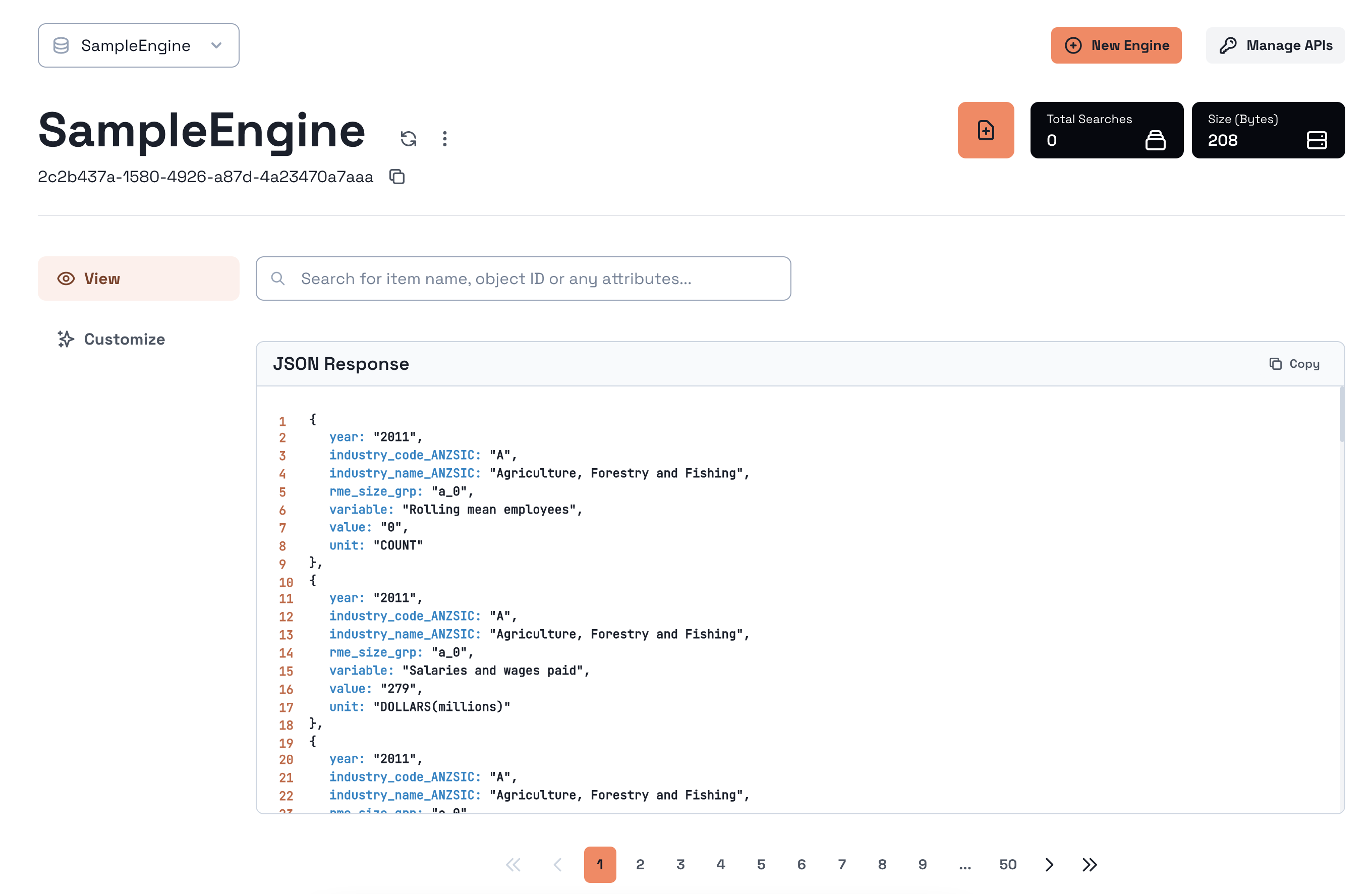
Upon successful insertion of data, you will see the JSON equivalent of it in the "**View**" section of the Engine. A sample is seen in the screenshot below.
An alternative way of inserting data into the Engine is via **REST APIs,** the details of which can be found in [following section](/sepana-search-api/web3-search-cloud/search-api.md).
.png?alt=media&token=928240ab-1a55-406a-a04c-9d7385427775)
.png?alt=media&token=41cb02ef-1f83-4bd5-a74e-95b95f3fe552)